
It Started With a Lizard: How a Diabetes Medicine Became a Weight-Loss Treatment

You have heard the names. Ozempic. Wegovy. Mounjaro. Zepbound. Maybe a coworker lost 40 pounds. Maybe a neighbor says food no longer runs their day.
Here is what most people do not know. These medicines were not made for weight loss. They were made for type 2 diabetes. And their story starts with a lizard.
First, what is GLP-1?
GLP-1 is a hormone. Your gut makes it when you eat. It has three main jobs:
- It tells your body to release insulin, but only when your blood sugar is high.
- It slows down your stomach, so food stays with you longer.
- It tells your brain that you are full.
Scientists found GLP-1 in the 1980s. But there was a big problem. The natural hormone breaks down in the blood in a minute or two. It was gone before it could work as a medicine.
A lizard in the desert
The fix came from a strange place: the Gila monster. It is a venomous lizard from the deserts of the Southwest and Mexico.
In 1992, Dr. John Eng, a researcher at the VA hospital in the Bronx, found something new in its venom. It works like GLP-1, but it lasts much longer in the body.
That became the first medicine of its kind. In 2005, the FDA approved it as Byetta, for type 2 diabetes. Newer versions lasted even longer. Victoza (2010) is taken once a day. Ozempic (2017) is taken once a week.
The surprise on the scale
Doctors noticed something. People taking these drugs for diabetes had lower blood sugar, and they lost weight too. In studies of Victoza's medicine, more than half of the patients lost at least 5% of their weight.
Lotte Bjerre Knudsen, a scientist at the drug maker Novo Nordisk, pushed to test higher doses for weight loss. Not everyone at the company agreed. It worked. Then things moved fast:
- 2014: Saxenda, a higher dose of Victoza's medicine, is approved for weight loss.
- 2021: Wegovy is approved for weight loss. It is Ozempic's medicine at a higher dose.
- 2022 and 2023: Mounjaro (for diabetes) and Zepbound (for weight loss) arrive. Their medicine acts like two gut hormones, not one.
- December 2025 and April 2026: The first weight-loss pills arrive: the Wegovy pill and Foundayo.
In 2024, Knudsen and two early GLP-1 scientists, Joel Habener and Svetlana Mojsov, won the Lasker Award, one of medicine's top prizes.
How much weight do people lose?
In a large study of Wegovy's medicine, people lost about 15% of their weight in just over a year. People who got a placebo (a shot with no medicine) lost about 2%.
For someone who weighs 200 pounds, 15% is 30 pounds. Half of the people on the medicine lost that much or more.
In a study of Zepbound's medicine, people on the highest dose lost about 21%. That is about 42 pounds for a 200-pound person.
Results differ from person to person. In both studies, people also got help eating better and moving more.
More than a number on the scale
For many people, the biggest change is how they feel. In the Wegovy study, people on the medicine said moving and doing daily tasks got easier. People on the placebo did not improve as much.
Scientists have found other benefits too:
- Heart: In people with heart disease, Wegovy's medicine cut the risk of heart attack, stroke or heart death by 20%.
- Sleep: In 2024, Zepbound became the first medicine approved for sleep apnea in adults with obesity.
- Kidneys and liver: In 2025, Ozempic was approved to protect the kidneys of some people with diabetes. Wegovy was approved for a serious fatty liver disease called MASH.
No wonder so many people use them. In a KFF poll from early 2026, almost 1 in 5 U.S. adults said they had taken a GLP-1 medicine. 12% were taking one right then, double the share in 2024. And Gallup found the U.S. obesity rate fell from 39.9% in 2022 to 37% in 2025. Gallup is careful to say the drugs are not a cure-all.
So, does insurance pay for it?
The short answer: for diabetes, usually yes. For weight loss, it depends on your plan.
Here is how big that gap can be. In 2024, KFF looked at Marketplace plans in states that use HealthCare.gov. 82% of plans covered Ozempic, the diabetes version. Only 1% covered Wegovy, the weight-loss version. It is the same medicine.
In KFF's 2026 poll, about 1 in 3 people who had used these drugs paid the whole cost themselves.
Medicare
For years, the law did not let Medicare drug plans pay for medicines used only for weight loss. They could pay for other uses, like diabetes, heart risk or sleep apnea.
That changed on July 1, 2026, with a short-term program called the Medicare GLP-1 Bridge. People with Medicare Part D who qualify pay $50 a month for Wegovy, Zepbound or Foundayo. You need a BMI of 35 or more, or a lower BMI plus certain health problems. (BMI is a number based on your height and weight.)
Your doctor must ask for approval first. If the answer is no, there is no appeal, but your doctor can send the request again if something was wrong. The program is set to end on December 31, 2027.
Medicaid
Each state decides. In January 2026, only 13 states covered these drugs for weight loss in their main Medicaid program. Some states had just stopped because of the cost.
Insurance through a job
In 2025, 19% of companies with 200 or more workers covered these drugs for weight loss. At companies with 5,000 or more workers, it was 43%. Many add rules, like a minimum BMI or a health program.
Marketplace plans
Marketplace (Obamacare) plans do not have to cover weight-loss drugs, and most do not. Each plan has its own drug list, so check yours.
Why don't more plans pay?
- The price. The list price of Wegovy is about $1,350 a month. Zepbound's is almost $1,100. Novo Nordisk plans to cut Wegovy's list price to $675 in January 2027.
- So many people could use them. About 4 in 10 U.S. adults have obesity.
- They are usually taken for years. When people stop, the weight tends to come back. In one study, people regained about two-thirds of it within a year.
Paying on your own
There is good news here. Cash prices have dropped a lot. As of September 2026, the makers sell directly to patients for about $149 to $449 a month. It depends on the medicine and the dose, and the pills cost the least. Prices change often, so check the maker's website.
If your job-based plan does cover it, a maker's savings card can cut your cost to as little as $25.
What to know before you start
- You need a prescription. These medicines are for adults with obesity, or with overweight and a related health problem.
- Side effects are common at first. Nausea, vomiting, diarrhea and constipation happen most when you start or raise the dose. That is why doses start low and go up slowly. Rare but serious problems include pancreatitis and gallbladder trouble. Tell your doctor if you or your family have had medullary thyroid cancer.
- Buy only from a real pharmacy. The FDA warns about fake and unapproved versions sold online. Compounded versions are not FDA-approved, and the FDA has received hundreds of reports of problems with them.
- Plan for the long run. Ask your doctor what happens if you stop.
How to check your own coverage
- Find your plan's drug list, also called a formulary. Look for Wegovy, Zepbound or Foundayo.
- Ask if you need prior authorization. That means your doctor must get the plan's OK first.
- If the plan says no, you can appeal. With most plans, you have 180 days to ask.
- If you have Medicare, ask your doctor about the GLP-1 Bridge before it ends.
It started with a lizard and a diabetes study. Today it is one of the biggest health stories of our time. For millions of people, it has meant less weight, a healthier heart and an easier daily life. Is it right for you? Ask your doctor. Will your plan pay? Ask your plan today.
Sources
How GLP-1 works
- Cleveland Clinic, GLP-1 Agonists: What They Are, How They Work & Side Effects
- American Diabetes Association, What Are My Options for Type 2 Diabetes Medications?
- Collins L, Costello RA. Glucagon-Like Peptide-1 Receptor Agonists. StatPearls, NCBI Bookshelf
- Feingold KR. Oral and Injectable (Non-Insulin) Pharmacological Agents for the Treatment of Type 2 Diabetes. Endotext, NCBI Bookshelf
- InformedHealth.org (IQWiG), Medication for type 2 diabetes
- Rizvi AA, Rizzo M. The Emerging Role of Dual GLP-1 and GIP Receptor Agonists in Glycemic Management and Cardiovascular Risk Reduction. Diabetes Metab Syndr Obes, 2022
- The diaTribe Foundation, GLP-1 Receptor Agonists
- Wang JY, Wang QW, Yang XY, et al. GLP-1 Receptor Agonists for the Treatment of Obesity: Role as a Promising Approach. Front Endocrinol, 2023
- Mayo Clinic, Semaglutide (subcutaneous route)
- NHS, Semaglutide
The discovery
- Lasker Foundation, GLP-1-based therapy for obesity (2024 award)
- Friedman JM. The discovery and development of GLP-1 based drugs that have revolutionized the treatment of obesity. PNAS, 2024
- Eng J, et al. Isolation and characterization of exendin-4, an exendin-3 analogue, from Heloderma suspectum venom. J Biol Chem, 1992
- U.S. Food and Drug Administration, Drugs@FDA: Byetta (exenatide), approved April 28, 2005
Studies and approvals
- Wilding JPH, et al. Once-Weekly Semaglutide in Adults with Overweight or Obesity (STEP 1). N Engl J Med, 2021
- Wilding JPH, et al. Weight regain and cardiometabolic effects after withdrawal of semaglutide (STEP 1 extension). Diabetes Obes Metab, 2022
- Jastreboff AM, et al. Tirzepatide Once Weekly for the Treatment of Obesity (SURMOUNT-1). N Engl J Med, 2022
- Lincoff AM, et al. Semaglutide and Cardiovascular Outcomes in Obesity without Diabetes (SELECT). N Engl J Med, 2023
- UCLA Health, Semaglutide weight loss: What you need to know
- Drugs.com, Wegovy
- FDA, FDA Approves New Medication for Chronic Weight Management (Zepbound, November 2023)
- FDA, FDA Approves First Treatment to Reduce Risk of Serious Heart Problems Specifically in Adults with Obesity or Overweight (March 2024)
- FDA, FDA Approves First Medication for Obstructive Sleep Apnea (December 2024)
- Novo Nordisk, Ozempic approved for chronic kidney disease in adults with type 2 diabetes (January 2025)
- Novo Nordisk, Wegovy approved for MASH (August 2025)
- Novo Nordisk, FDA approves the Wegovy pill (December 2025)
- Eli Lilly, FDA approves Lilly's Foundayo (orforglipron) (April 2026)
How many people use them
- KFF, KFF Health Tracking Poll, March 2026 (topline)
- Gallup, U.S. Obesity Rate Declining (October 2025)
- Centers for Disease Control and Prevention, Obesity and Severe Obesity Prevalence in Adults: United States, August 2021 to August 2023
Insurance and prices
- GoodRx, Are Weight-Loss Drugs Covered by Insurance Plans?
- Centers for Medicare & Medicaid Services, Medicare GLP-1 Bridge and information for providers
- Medicare.gov, Weight loss drugs
- U.S. Code, 42 U.S.C. 1395w-102(e), the Part D exclusion of drugs used for weight loss
- KFF, Medicaid Coverage of and Spending on GLP-1s (January 2026)
- KFF, 2025 Employer Health Benefits Survey
- KFF, Costly GLP-1 Drugs Are Rarely Covered for Weight Loss by Marketplace Plans (2024)
- healthinsurance.org, Does health insurance cover drugs used for weight loss?
- Novo Nordisk, List price reduction for Wegovy, Ozempic and Rybelsus (February 2026)
- TrumpRx.gov, list and cash prices
- Novo Nordisk, Save on Wegovy; Eli Lilly, Zepbound savings and support and Foundayo savings and coverage
- HealthCare.gov, Internal appeals
Safety
This article is for general information. It is not medical advice, and it does not recommend any medicine or plan. Coverage rules and prices change often, so check with your doctor and your plan. Sources consulted September 24, 2026.
Recent posts
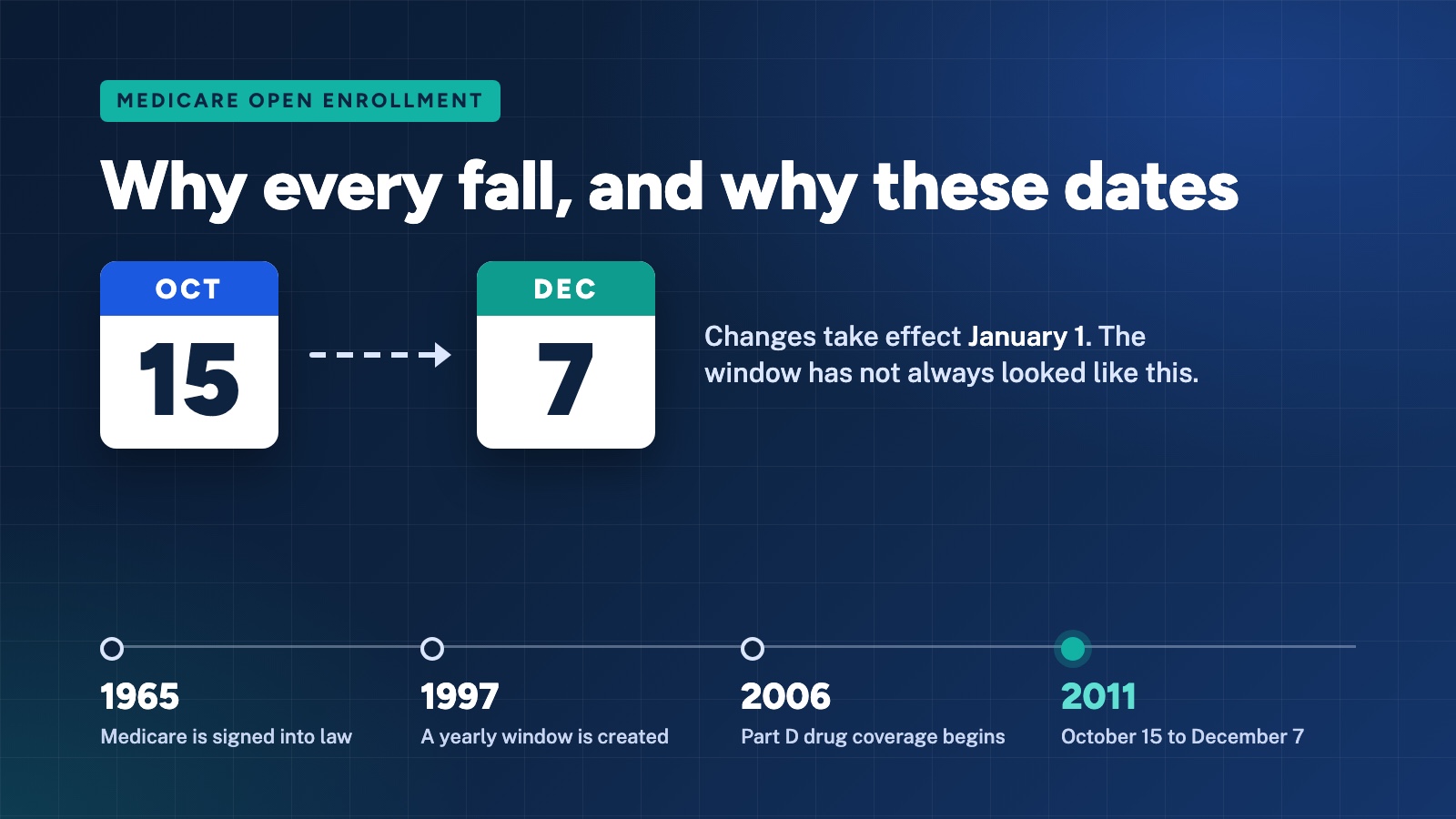
Why Medicare open enrollment runs from October 15 to December 7
Every fall, people with Medicare get seven weeks to change their coverage for the next year. For Medicare's first three decades there was no such window, and until 2011 it ended on December 31. What the period is for, where it came from, and why it closes on December 7.
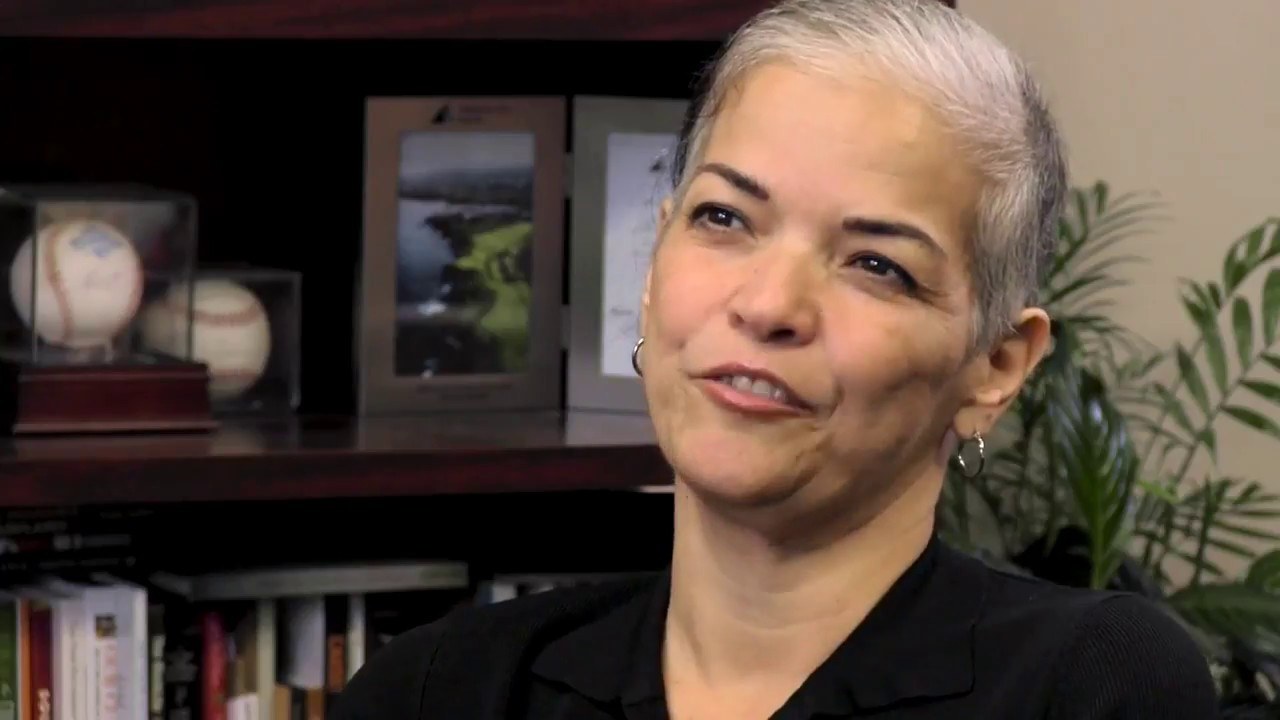
The check that came while she was still here
Elizabeth bought a term life policy just before a trip. Months later she was told she had three to six months to live, and the policy paid her about 90 percent of its value while she was alive. What living benefits are, told through her story.
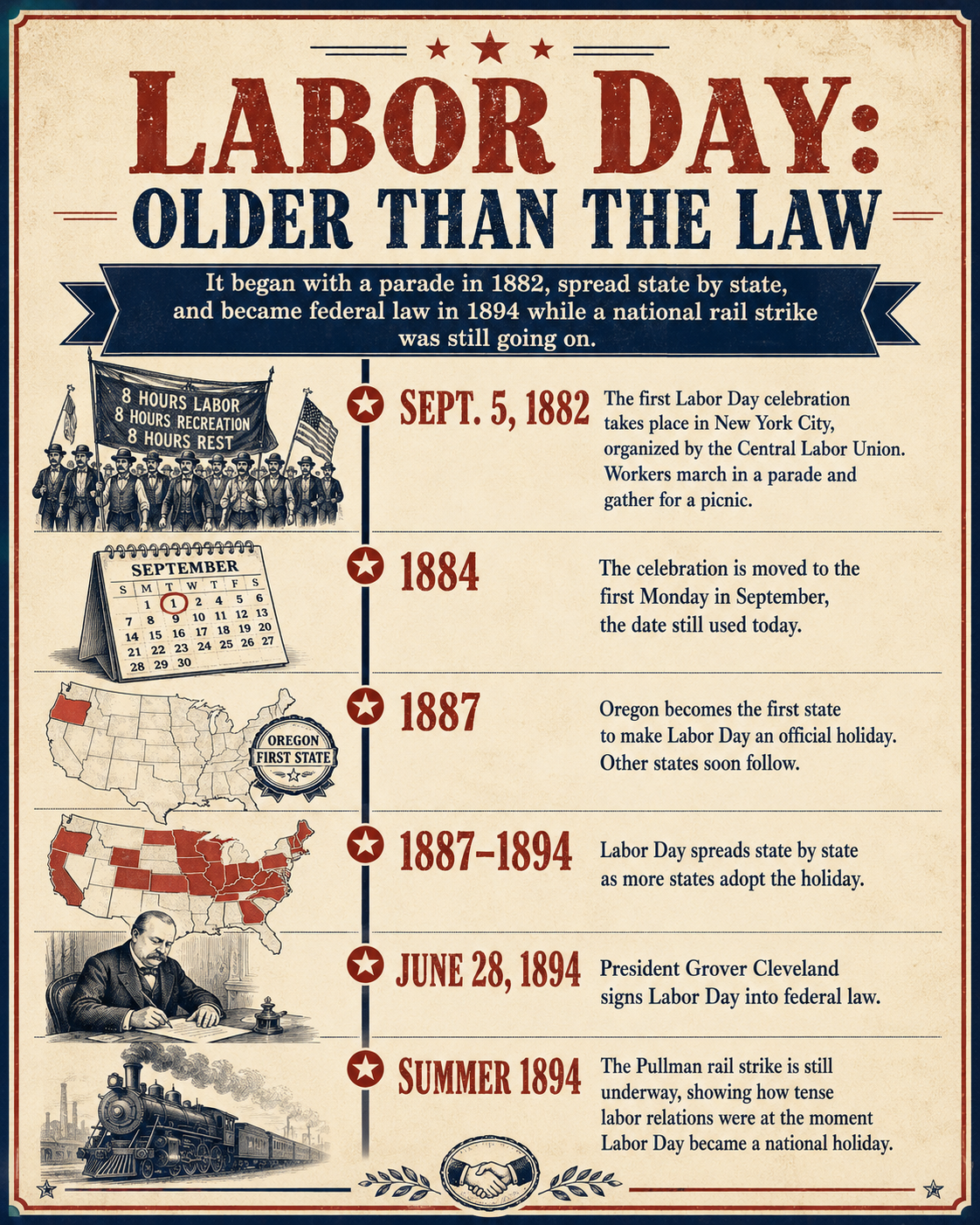
Why the first Monday in September is a holiday
Labor Day is older than the law that created it. It started with a parade in New York in 1882, spread state by state, and became federal law in 1894 while a national rail strike was still going on. A short history, with the dates.