
The check that came while she was still here

Elizabeth Martinez Genova was born and raised in Miami. She served in the military, went to law school, raised a son, and spent whatever time was left over on planes. Thailand. Jerusalem. The tulip fields outside Amsterdam. Traveling was, in her words, her big thing.
Some years ago, just before a trip to Turkey, she sat down with Alberto Carballeira, one of our founders, and bought a life insurance policy. Nothing was wrong. Alberto had explained that the policy could pay her while she was alive if she ever became seriously ill, and she said later that she had no idea such a thing existed. It made sense to her because, as she put it, life is very unpredictable.
She was about to find out how unpredictable.
January
That January her doctor ran some tests and sent her to the emergency room with pancreatitis. The scans showed a shadow. Nobody thought much of it, but they did an endoscopy to be sure, and that is how they found the cancer.
It was stage four, then it was terminal, and then a doctor was telling her she had three to six months. "First a slap in the face," she said, "and then a kick to the gut."
And right behind a diagnosis like that comes the thought nobody talks about. How am I going to pay my bills? How am I going to take care of just surviving, even in this short time?
The claim
Alberto filed the claim. Not long after, Elizabeth was holding a check for a little over $239,000. Her policy was for $250,000, so that was about 95 percent of it, paid to her, while she was alive, with no conditions on how she spent it.
She paid off her mortgage. She cleared her debts. And there was enough left to spend time with her family and to see a few of the places on the long list she had never gotten to.
"It lifted a burden," she said. The video is named after that phrase, and it is the whole point of this article.
Elizabeth has since passed away. We share her story with gratitude, because she chose to tell it on camera so that other people would know what she had not known: a life insurance policy can do its job while you are still here. You can watch her tell it herself in three and a half minutes.
What actually happened, in plain words
Elizabeth had a term life policy with living benefits. Insurance companies also call them accelerated death benefits; the two names mean the same thing. If a doctor certifies one of a short list of conditions, the policy lets you take part of your own death benefit early, while you are alive. Transamerica, whose Trendsetter LB is a term policy built around exactly this, puts it simply: "It's life insurance for the living."
There are three doors in, and most policies with living benefits have all three. A terminal illness: a doctor certifies that your life expectancy is short, commonly 24 months or less. This was Elizabeth's claim, and it is the door that opens widest. A critical illness: a heart attack, a stroke, cancer, kidney failure and a handful of others, depending on the carrier. You do not have to be dying; you have to have been diagnosed. A chronic illness: you can no longer manage two of the basic daily activities on your own, such as bathing, dressing or eating, or a doctor certifies severe cognitive impairment. That is the door for the long, slow illnesses.
The money is paid to you, not to your beneficiary, and you decide what it is for. Care your health plan does not cover. Income you can no longer earn. Help at home. The mortgage, the groceries. Or, as Transamerica's brochure puts it, bringing the entire family together during a difficult time.
What is fair to know before you count on it
Living benefits are an advance on your own policy, not extra money. Whatever is paid to you now comes out of what your family would have received later, and it is paid at a discount: the carrier looks at your life expectancy and works out what the benefit is worth today. The shorter the expectancy, the closer the payout gets to the full amount, which is why Elizabeth's terminal claim came to 95 percent. A critical or chronic claim pays less, and on the Transamerica policy those two stop at 90 percent, so a tenth always stays for your family.
You are told the number before you decide, and you can take some of it, all of it, or none. The money may be taxable in some situations and can affect Medicaid and other public assistance, so talk to a tax advisor before you accept the check. The details vary by carrier and by state, which is why we show you the actual rider language before you apply, never a summary of it.
Why term life is where most people start
Elizabeth's was a term policy, and that is no coincidence. Term life is the least expensive way to own a meaningful amount of coverage: you choose ten, twenty or thirty years, the premium stays level for all of them, and if you are still here at the end you can usually convert it to a permanent policy. The prices surprise people. In Transamerica's own illustration, a healthy 35-year-old woman buys $300,000 of coverage for 30 years for about $28 a month, and a healthy 45-year-old man buys $500,000 for 20 years for about $69. Your number depends on your age and your health, but that is the order of magnitude, and on both of those policies the three living benefits come included.
And if you want the policy to last a lifetime
Term coverage ends, and for many families that is exactly right. For others, a policy that never expires and quietly builds a cash value makes more sense, and that is what whole life is for. National Life describes its whole life policy in four promises: a guaranteed death benefit, a guaranteed cash value, level premiums that are guaranteed never to change, and the possibility of extra cash value from any dividends the company declares.
That cash value is yours. It can be borrowed against or withdrawn, which is how a whole life policy can become a modest source of income in retirement alongside Social Security, and National Life's Lifetime Income Benefit Rider can turn part of it into an income guaranteed for life once the policy is ten years old and you are between 60 and 85. Two honest caveats: whole life costs considerably more per dollar of coverage than term, and every loan or withdrawal reduces both the cash value and what your family eventually receives. It is a long commitment, not a savings account. But it carries the same living benefits as the term policy, at no extra cost, so the protection Elizabeth had is there too, for life.
What her story is really about
Nobody buys life insurance expecting to use it. Elizabeth certainly did not. She bought a policy before a trip because a man she trusted explained something she had never heard of, and a few months later it was the reason she could stop worrying about bills and spend the time she had with the people she loved.
That is the benefit of having one. Not the pitch, the thing itself.
If you would like to know what a policy with living benefits would look like for you, our life insurance page explains the options in plain language, and you can call us at (800) 305-7709, in English or in Spanish. We will tell you what it costs, show you the actual rider, and let you decide.
Sources
- Doctor Insurance One, Living Benefits Testimonial: "Lifted a Burden" (video, 2018)
- Transamerica, A Field Guide to Transamerica's Trendsetter LB (consumer brochure)
- National Life Group, Protection for When Life Happens: Life Insurance with Living Benefits (consumer brochure)
- National Life Group, Life insurance for individuals and families
Premium examples are the carriers' own illustrations and will differ for you. Living benefit conditions, percentages and fees vary by carrier, product and state; the policy and rider language govern. Sources consulted September 14, 2026.
Recent posts
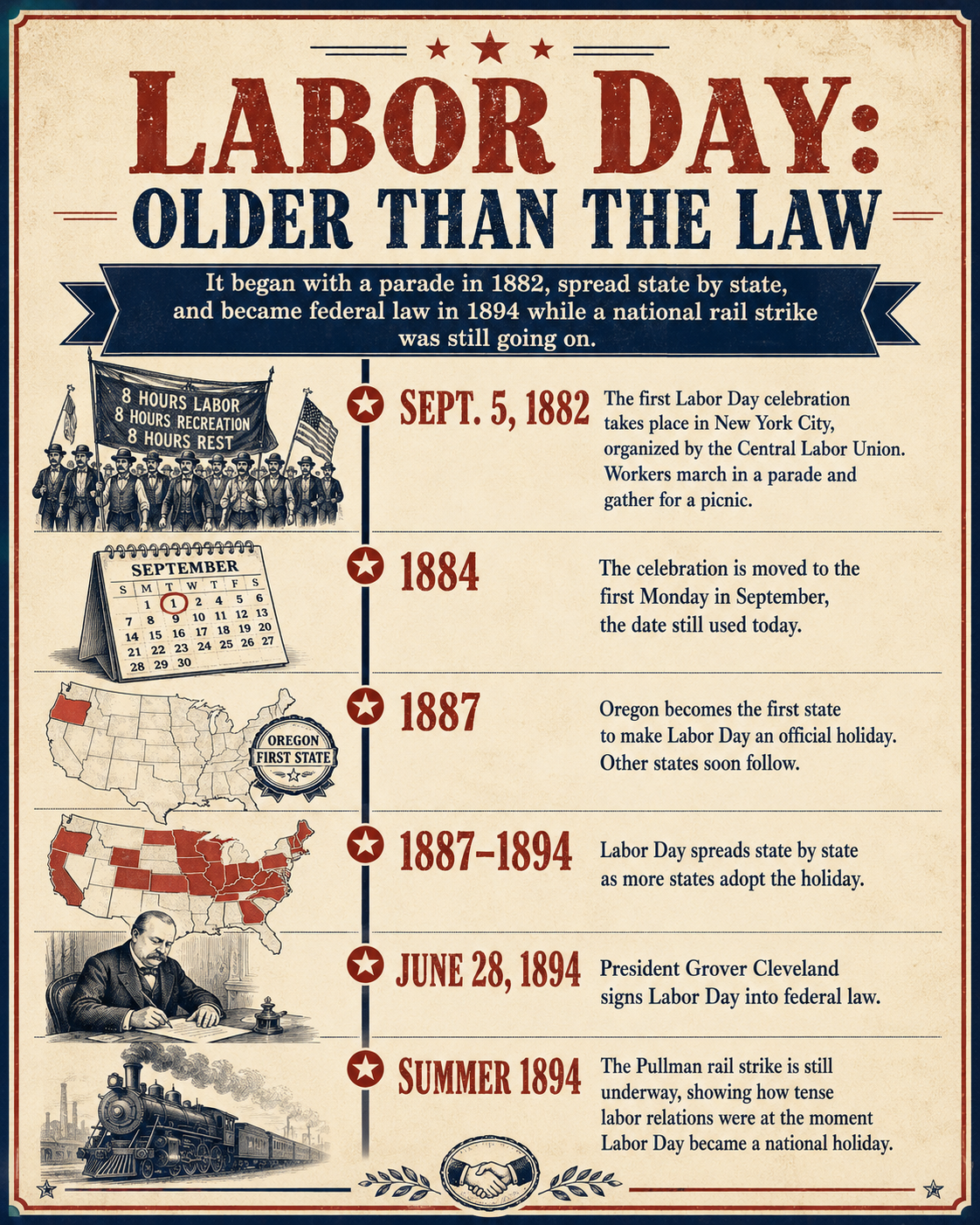
Why the first Monday in September is a holiday
Labor Day is older than the law that created it. It started with a parade in New York in 1882, spread state by state, and became federal law in 1894 while a national rail strike was still going on. A short history, with the dates.
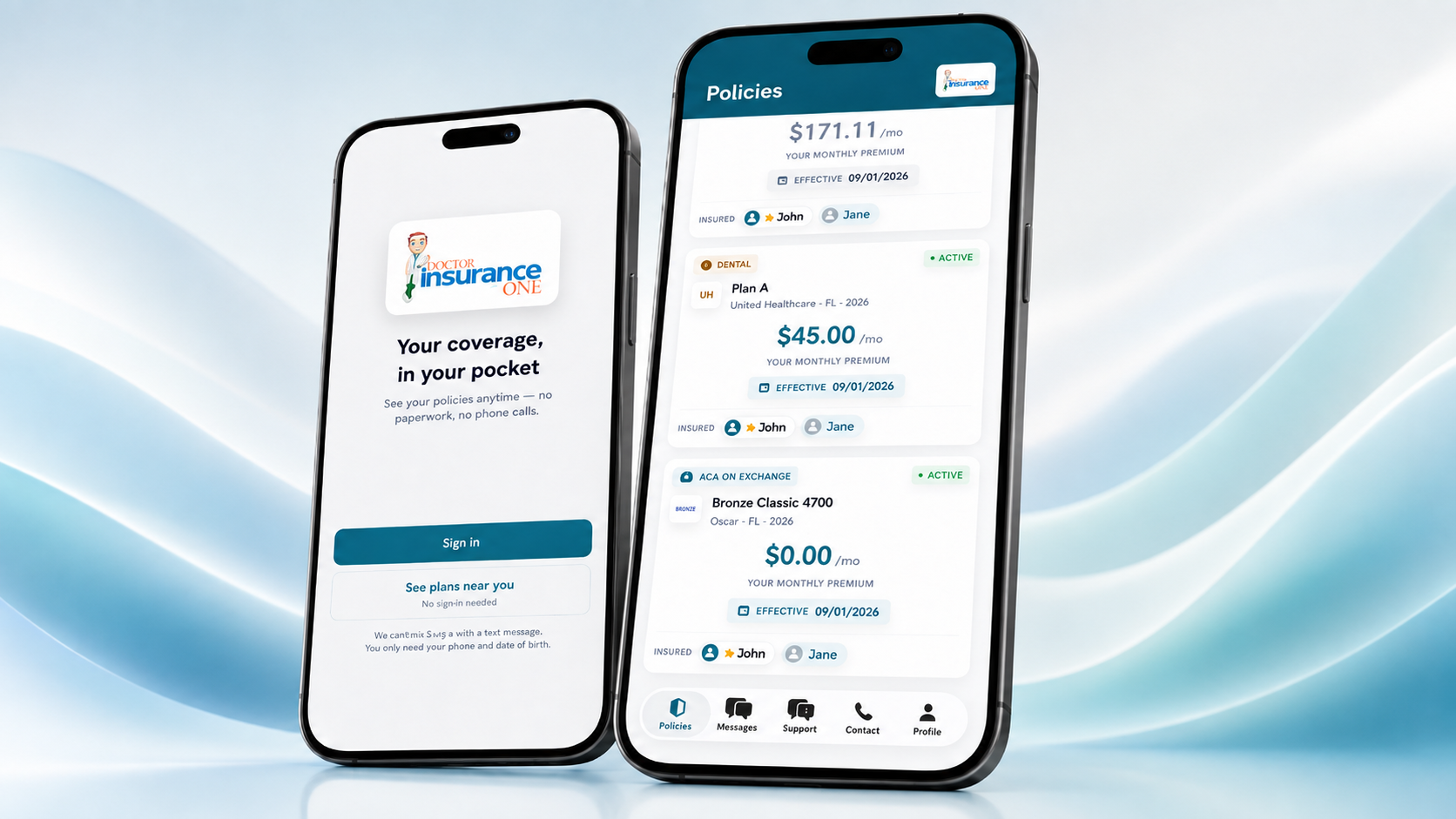
Your insurance card, without the phone call
You can now see your policies, find your member ID, ask for your insurance card and message your agent from your phone. It is free, it is in English and Spanish, and getting in takes about two minutes. Here is what it does, and what it does not.

Cigna and Baylor Scott & White Are Leaving the Marketplace After 2026
Two big names are ending their Marketplace plans on December 31, 2026 with close to half a million people. Nothing changes this year. Here is what happened, why so many companies are leaving at once, and what to do before Open Enrollment.